


AS ELECTRIC VEHICLES BECOME MORE COMMON, WHAT MAKES A BETTER TRANSPORTATION SYSTEM
Europe has spent more than a decade accelerating the transition to electric mobility. Today, electric vehicles are becoming part of everyday life across the continent. Yet as electrification moves from ambition to reality, a new question is emerging. How can Europe build a transport system that is not only cleaner, but also better for the people who rely on it every day?
Over the past decade, Europe has established itself as one of the world's leading regions in sustainable mobility. Electric vehicles are becoming increasingly common, charging infrastructure continues to expand, and public transport, cycling, and walkable cities have become central to urban planning. Together, these developments have played an important role in supporting the European Union's climate objectives.
As electrification reaches a new stage of maturity, however, the conversation is beginning to change. The first challenge was to replace internal combustion engines with zero-emission alternatives. The next challenge is more complex. It is about creating a transport system that is more efficient, more accessible, and better connected to people's daily lives.
This shift is reflected in the European Commission's New EU Urban Mobility Framework, which places equal emphasis on accessibility, inclusiveness, safety, and quality of life alongside decarbonization. Green mobility is no longer measured simply by the number of electric vehicles on the road or tonnes of carbon emissions avoided. Increasingly, it is measured by the quality of the mobility system itself and the value it creates for society.
Electrification Is No Longer the Final Destination
According to the European Automobile Manufacturers' Association (ACEA), battery electric vehicles (BEVs) accounted for 17.4% of all new passenger car registrations in the European Union in 2025, up from 13.6% the previous year. The International Energy Agency (IEA) also identifies Europe as one of the world's most advanced electric vehicle markets in its Global EV Outlook 2026.
These figures highlight an important transition. After years of investment, electrification is becoming a shared foundation rather than a competitive advantage. As more manufacturers offer high-quality electric vehicles, differentiation increasingly depends on the overall mobility experience rather than on the vehicle itself.
People no longer evaluate mobility services solely by what they drive. They judge them by convenience, reliability, accessibility, and how seamlessly different modes of transport work together. Electrification may provide the foundation for sustainable mobility. The quality of the transport system ultimately determines the quality of urban life.
A Better Mobility System Needs More Than One Solution
No single mode of transport can meet every mobility need in a modern city. As travel patterns become more diverse, from daily commuting and education to airport transfers and first and last mile connections, the challenge is no longer to optimize individual transport modes. It is to integrate them into a single, coherent mobility ecosystem. 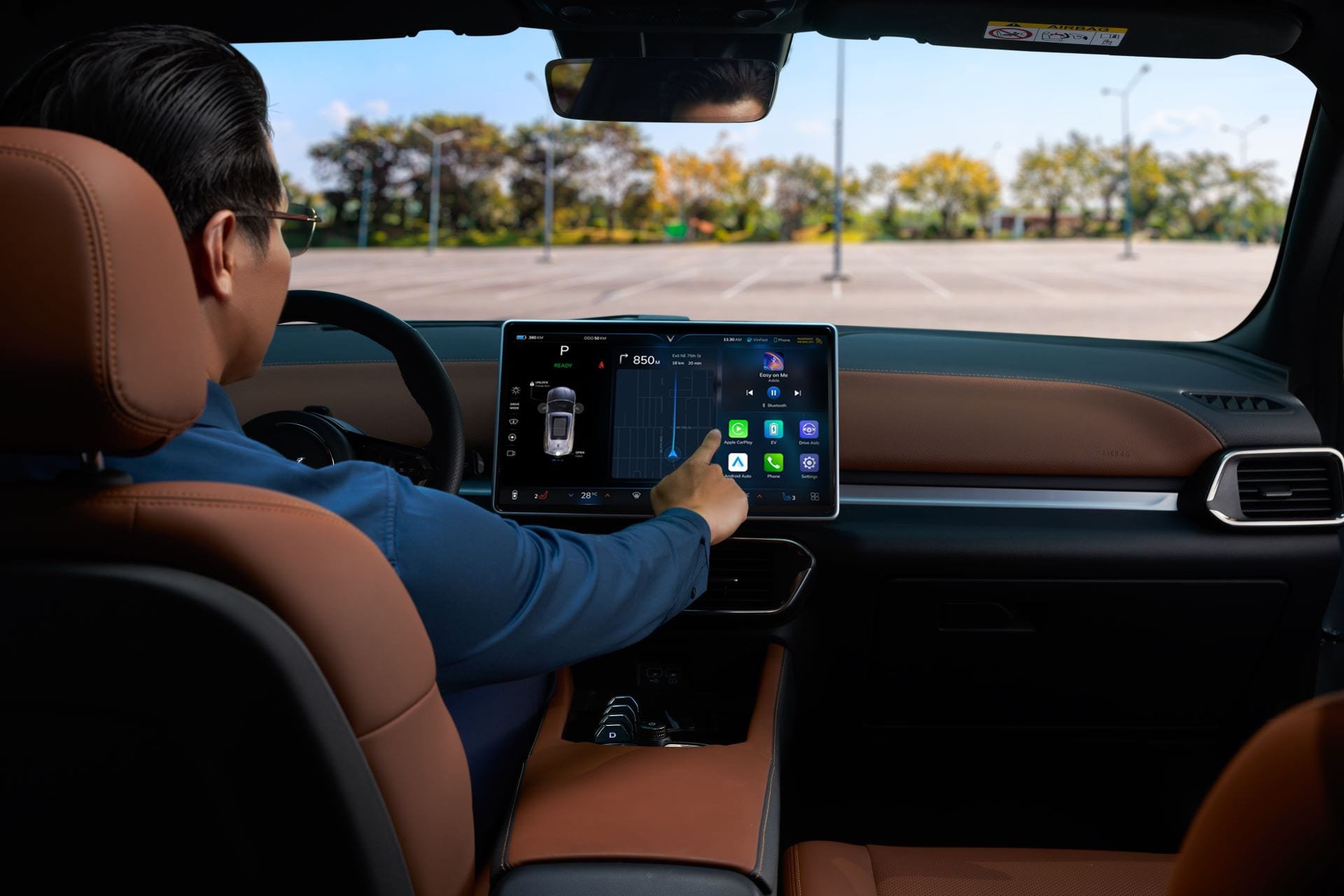
This is precisely the direction promoted by the European Commission through its vision for Multimodal Mobility. Under the New EU Urban Mobility Framework, public transport, urban fleets, ride-hailing platforms, cycling, walking, and last-mile logistics are recognized as complementary parts of one urban mobility system. Each serves a different purpose, but together they create a more seamless and efficient travel experience.
This shift is also reshaping the strategies of mobility companies around the world. As electrification increasingly becomes the common foundation of the transportation industry, competitive advantage is no longer defined solely by the quality of individual vehicles, but by the ability to integrate vehicles, infrastructure, and mobility services into a seamless user experience. This vision is reflected in Vingroup's approach to building an integrated mobility ecosystem, connecting VinFast electric vehicles, electric buses, charging infrastructure, and Green SM mobility services into a unified value chain. The objective extends beyond electrifying individual modes of transport. It is to help create a more seamless, convenient, and sustainable mobility experience for people living in modern urban environments.
What Cities Need Is Not More Vehicles, but More Value
In any competitive market, the entry of new businesses creates incentives for the entire industry to improve service quality, invest in technology, and innovate their operating models.
According to the European Commission, "in a competitive market, each company works hard to offer the best products and prices, and to improve both quality and choice." The Commission also notes that competitive markets "push companies to improve and innovate, leading to better products and services that are available to more people," while competition rules support broader policy objectives, including the green and digital transitions.
In urban mobility, the emergence of new mobility models can stimulate competition, expand consumer choice, create new employment opportunities, and encourage the industry as a whole to continuously improve the quality of its services.
For mature markets such as Europe, the arrival of a new mobility company does not automatically create value. Cities and citizens are looking for companies that can strengthen the mobility ecosystem by improving service quality, encouraging innovation, and supporting long-term sustainability goals.
That is the philosophy Green SM brings to Europe. Green SM operates within an integrated electric mobility platform that includes VinFast electric vehicles, charging infrastructure, electric public transport, and ride-hailing services. Today, the company is present in eight markets, has completed more than 4.2 billion kilometers of all-electric journeys, and delivers an average of 1.8 million green trips every day (as of 31 March 2026). More importantly, these operations have generated practical experience across diverse infrastructure environments, customer behaviors, and regulatory frameworks.
Green SM does not see that experience as a blueprint to be replicated. Every city has its own transport history, policy priorities, and mobility challenges. Europe is therefore not a market to reshape, but a mobility ecosystem to join. Green SM's ambition is to learn from local best practices, work alongside public and private partners, and contribute where its experience can create meaningful value.
Ultimately, the next chapter of sustainable mobility will not be defined by how many electric vehicles are on the road. It will be defined by how effectively every participant helps build a transport system that is more connected, more inclusive, and better suited to the everyday lives of the people it serves.
Sources:
European Commission
The New EU Urban Mobility Framework
Sustainable Urban Mobility
https://transport.ec.europa.eu/transport-themes/urban-transport/sustainable-urban-mobility_en
European Commission
Competition
https://commission.europa.eu/topics/competition_en
European Automobile Manufacturers' Association (ACEA)
New Passenger Car Registrations 2025
https://www.acea.auto/
International Energy Agency (IEA)
Global EV Outlook 2026
https://www.iea.org/reports/global-ev-outlook-2026
European Environment Agency (EEA)
Environmental Noise in Europe 2025
https://www.eea.europa.eu/


